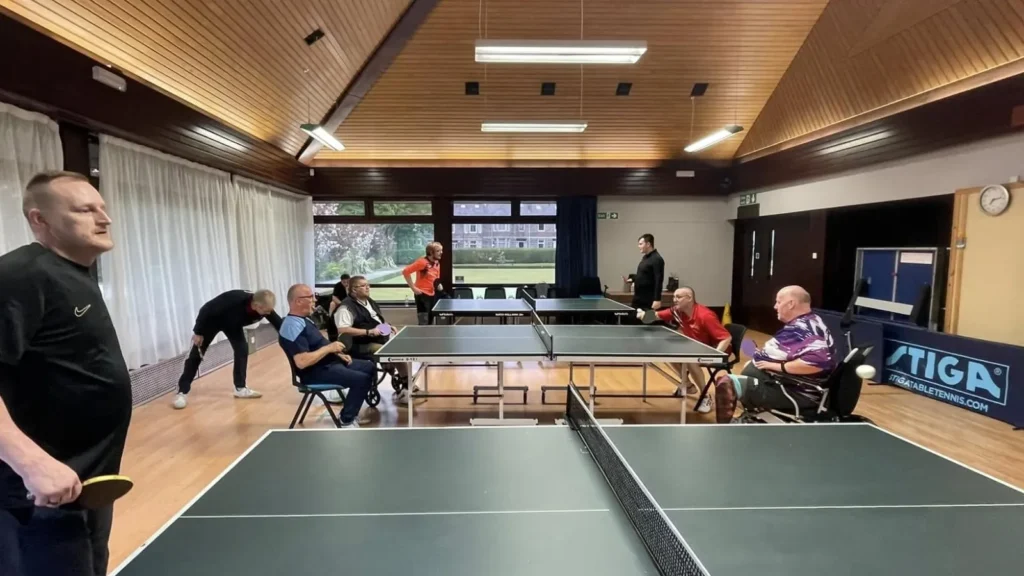
Inclusive Table Tennis in Aberdeen
Sport has the power to bring people together. It can build confidence, improve physical and mental wellbeing, create friendships and, perhaps most importantly, give everyone the opportunity to feel part of a team and a wider community.
For people with disabilities, access to appropriate sporting opportunities can be particularly important. Disability sport is not simply about competition and performance; it is about inclusion, participation and providing an environment where individuals can develop at their own pace, discover new abilities and enjoy being active.
Table tennis is particularly well suited to inclusive sport. It can be adapted to accommodate a wide range of physical and learning abilities, allowing players with very different needs to participate together. For some, it may be a recreational activity and a chance to socialise, while for others it can become a pathway towards competitive sport.
In Aberdeen and the surrounding area, the table tennis community has a long history of supporting disability sport. That history owes a great deal to one individual in particular: George Keith.
The George Keith legacy
George Keith was a dedicated member of the Aberdeen & District Table Tennis Association (ADTTA), playing in the ADTTA league for approximately 50 years. His contribution to the sport, however, went far beyond his own playing career.
For around 20 years, George and Anne ran the Summerhill Disabled Club every Sunday. The club provided a regular opportunity for people with disabilities to play table tennis, socialise and take part in a wide range of activities. Their involvement extended well beyond the table, with trips to Blackpool, hillwalking outings, weddings and many other events helping to create a strong sense of friendship and community.
George was also an accomplished player. He competed with Scottish Disability Sport, winning the Scottish Championships on numerous occasions, and represented Scotland at a number of national disability table tennis championships. His achievements reached the international stage when he represented Great Britain at the 1984 Paralympic Games in New York.
His commitment to developing disability table tennis was just as significant. George established a Scottish disabled table tennis league and coached players with additional support needs for more than 20 years. He also took the Aberdeen disabled team to Norway, giving players the opportunity to compete internationally and experience the sport beyond Scotland.
Developing young players
In the 1990s, George established the first organised sessions in the region specifically for youngsters with learning disabilities. He brought together around a dozen enthusiastic players and, together with Harry Vine, coached them and helped them maximise their potential.
Among those players were Alex Rae and Stephen Welsh, who went on to participate in major Special Olympics events.
George also organised matches against similar groups from Dundee and Glasgow. Players and supporters travelled by bus and train to the various venues, creating opportunities not only for competition but also for social interaction and friendship. The sessions continued until George’s untimely death in 2019, aged 77.
George’s contribution established an important foundation for disability table tennis in the area. His approach demonstrated that with encouragement, coaching and opportunity, people with disabilities could enjoy the sport at whatever level suited them – from recreational participation through to international competition.
A pause and a new beginning
Following George’s death, the development of disability table tennis was further interrupted by the COVID-19 pandemic. As with almost all organised table tennis, disability sessions effectively stopped for the best part of two years.
In 2024, ADTTA took up the baton, determined to get disability table tennis going again in Aberdeen.
A new Monday evening session was established at Westburn Park Pavilion, with the intention of creating an inclusive environment for anyone with a disability. The session welcomed people with a wide range of needs and conditions, including learning difficulties, autism, multiple sclerosis, Parkinson’s disease and amputees.
An amputees’ table tennis session had already been established at the Sports Village, and those players were keen to have Westburn Park as an additional venue. This provided an opportunity to bring together players with different backgrounds and abilities and to create a genuinely inclusive table tennis environment.
ADTTA provided volunteer coaches to help players develop their skills, gain confidence and, most importantly, enjoy their time at the table.
Working in partnership with Sport Aberdeen
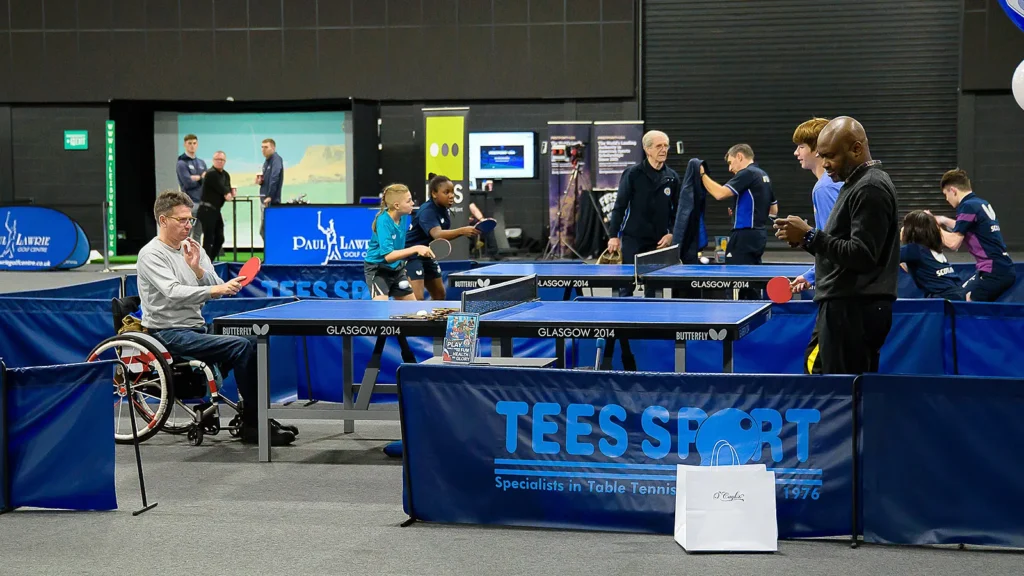
In 2025, Sport Aberdeen became involved, providing an important boost to the programme. Sport Aberdeen generously took over the cost of the venue hire, while ADTTA continued to provide volunteer coaches.
The partnership has proved extremely successful. Participation has grown steadily, demonstrating both the demand for disability table tennis and the value of providing accessible opportunities within the local community.
The development has also created opportunities for players who want to take their table tennis further.
Players from the group have attended disability table tennis events in Perth during the summers of 2025 and 2026, where they performed very well and gained valuable competitive experience.
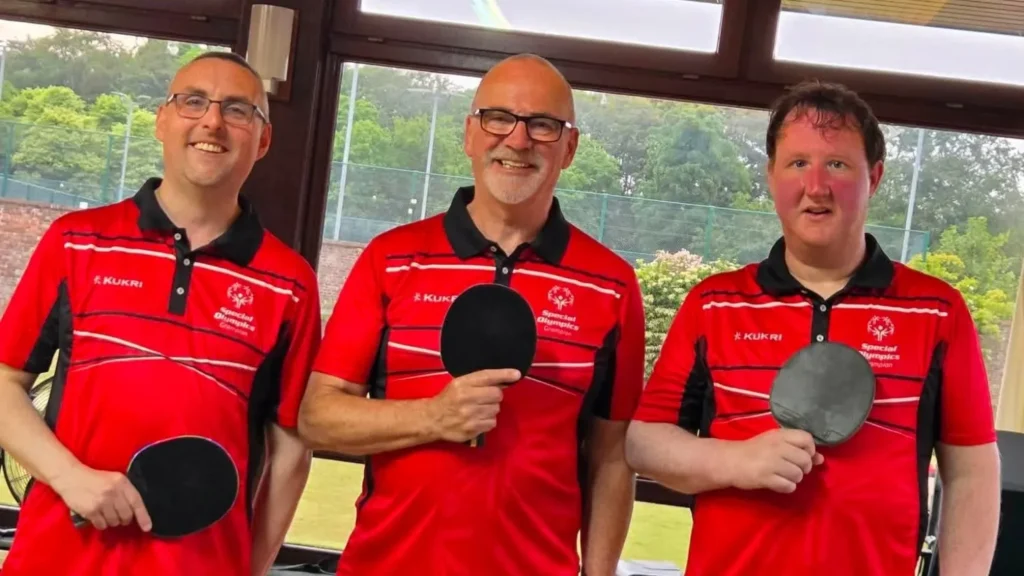
Another important milestone came during the 2025/26 ADTTA league season, when a team was formed to compete in Division 4. This was the first time a disability team had entered the local ADTTA leagues.
This was a significant achievement. It demonstrated that inclusive participation and competitive sport can go hand in hand, giving players the opportunity to progress from attending a disability session to representing their club in the local league.
Disability table tennis today
Today, the disability sessions continue to grow, providing a welcoming environment for people with different disabilities and support needs.
The current Monday evening sessions at Westburn Park Pavilion are run through the partnership between ADTTA and Sport Aberdeen. ADTTA provides volunteer coaches, while Sport Aberdeen supports the programme through the provision of the venue.
The popularity of the sessions means that the existing space is now approaching capacity. Sport Aberdeen is therefore looking to book an additional room with three tables, which will allow more players to take part and provide room for the programme to develop further.
The progress made since 2024 is extremely encouraging. From the early sessions established by George Keith in the 1990s, through the disruption caused by the pandemic, to the revival of disability table tennis and the creation of a disability team in the ADTTA leagues, there is now a strong foundation for the future.
Most importantly, the current programme continues the principle that George championed throughout his life: everyone should have the opportunity to enjoy table tennis, develop their abilities and be part of the sporting community.
George’s legacy lives on every Monday evening at Westburn Park – in every new player who picks up a bat, every skill learned, every friendship made and every point played.