Making best use of available resources
Cost of equipment is always a problem. New venues can’t start up without tables. A decent table (minimum 22mm hick top) able to withstand regular use will cost around £600+ and a good quality table with 25mm top will be about £1000 or more. We recommend asking for advice before buying any equipment and it is always worthwhile to shop around.
The same advice applies to other equipment – bats, nets, barriers, training balls or a robot and catcher net. ADTTA may have access to discounts from some suppliers. Grants may be available from e.g. local environmental projects such as windfarms.
Regular use and maintenance
With careful management, most equipment can last well. A key issue is regular checking for damage to tables, barriers, bats and nets. Regular maintenance with a suitable repair kit and appropriate staff induction on handling procedures can minimise damage. Key points are discussed in the next sections.
Table tennis tables
Recently ADTTA has started repairing older tables which have been damaged. Spare parts are available but are not so easy to find without the right contacts. We have been able to repair redundant damaged tables and loan them out to schools and Sports Centres.
If you have a table which is no longer used or appears to be unusable due to damage, please do not throw it out! ADTTA will come and inspect it and, if not needed but repairable, take it away for repair and reuse it elsewhere. If beyond repair, a table will always be a source of spares and should never be thrown away.
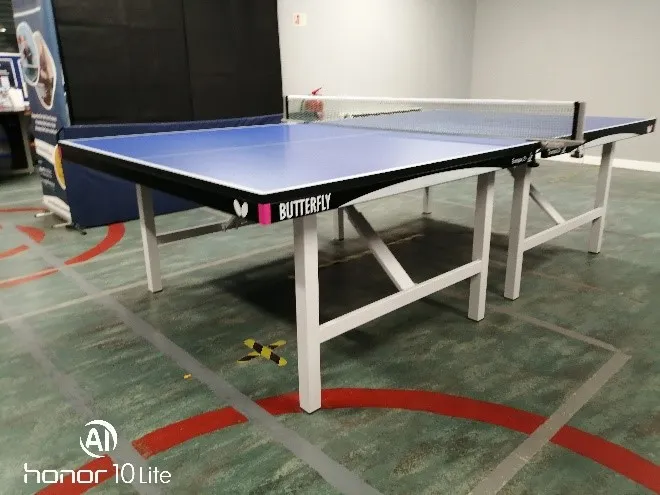
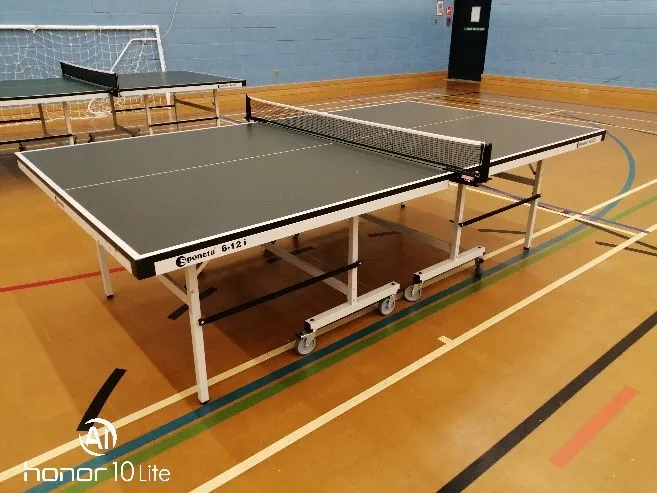
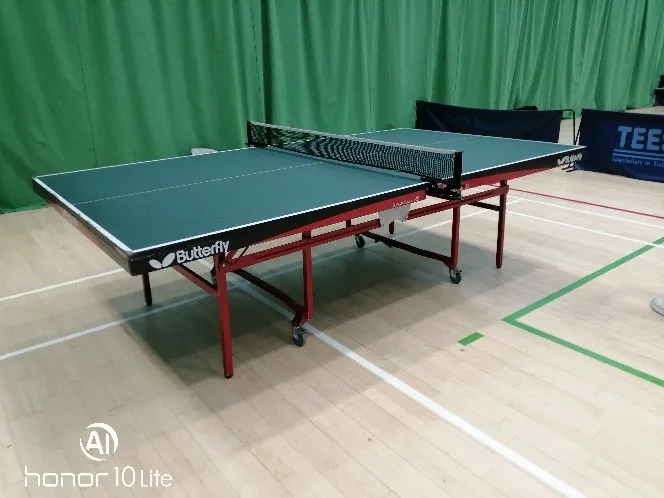
There are 3 main designs of table:
- Tables with two separate halves each of which stands on its own legs
- Tables with two separate halves each of which has a set of wheels for easy movement
- Tables with both halves attached to the same frame which is on wheels
Best practice in handling tables:
- Two people should always work together to open or close tables.
- Ensure that safety catches are released before opening or closing a table. Before doing anything, always look for the safety catch and then release it. It is easy to tip over and damage a table if the safety catch is not released first.
- When already open, table design C can be moved easily by slightly lifting each end (NOT the sides) so that only the wheels are touching the floor.
- Tables which comprise two separate halves (designs A or B) should always be stored with the top surfaces placed together to avoid scratching the surfaces.
- Uneven floors and raised thresholds between the storage and the playing areas should be avoided if at all possible.
- Tables should not be used as seats as the top can easily crack.
To give early warning of problems, regular checks should be made of the following:
- Safety mechanism engaging correctly – this stops the table halves from falling open after closure
- Width of gap between table halves (design C) when open should be constant across the table and not too large. Total length of table when open should be 2.74m
- When deployed, both surfaces of a table should be horizontal and at the same level, 0.76m above the floor
- Table tops should be sitting vertically when folded up
- Cracks in welds at frame joints which are liable to weaken when tables are wheeled over uneven floors or thresholds.
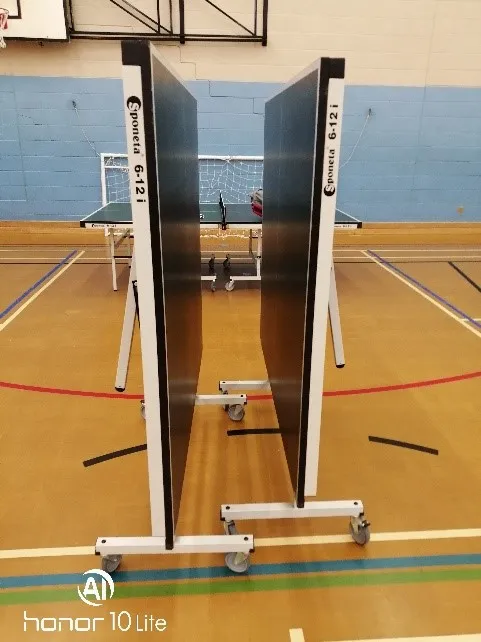
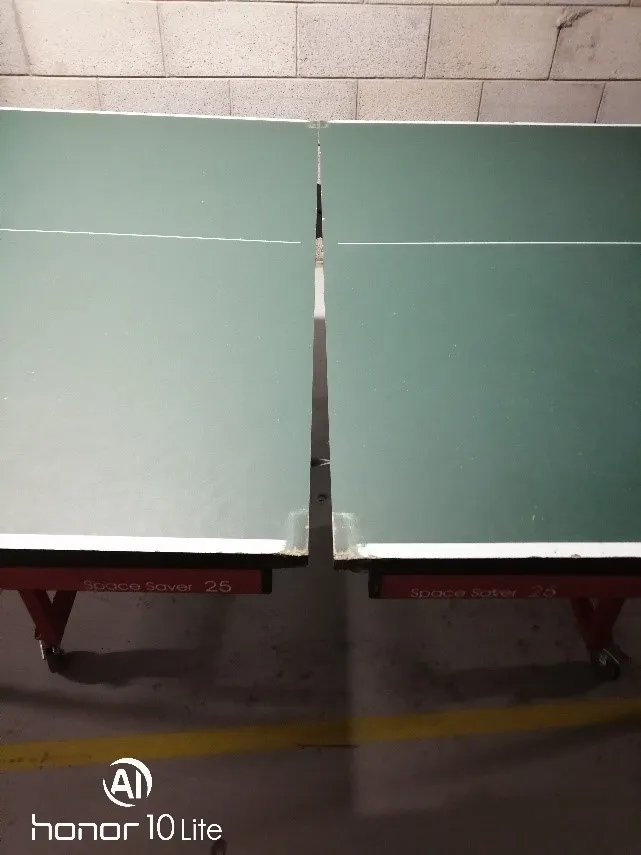
Typical issues which should be corrected as soon as possible are:
- Loose bolts over the whole frame, especially new tables
- Loose wheels – lift the table gently off the ground at each wheel and check whether there is any play in the wheel attachment to the frame
- Broken adjustable feet (Image 6) – they should be easily rotated to raise or lower the table surface. If stiff, the whole unit may need replacing as it may be cracked
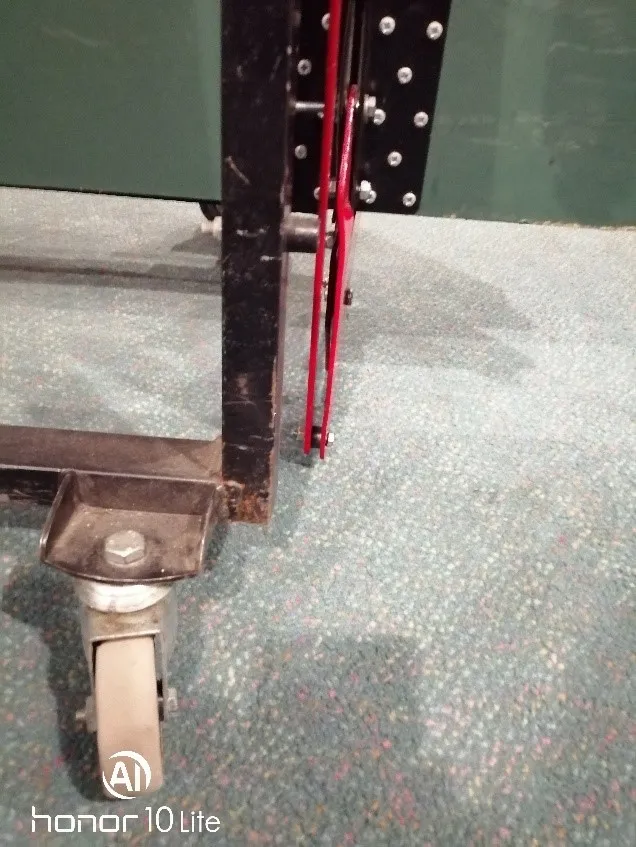
- Plates (red) which are even slightly bent (Image 7) will cause further damage to the mechanism if not replaced. Compare with Image 8 of undamaged plate.
- Brackets, which act as roller guides as the table is opened or closed, may be distorted – associated bolts may be bent
- Screws holding the brackets attaching the legs to the table top can be pulled out, in extreme cases of mishandling.
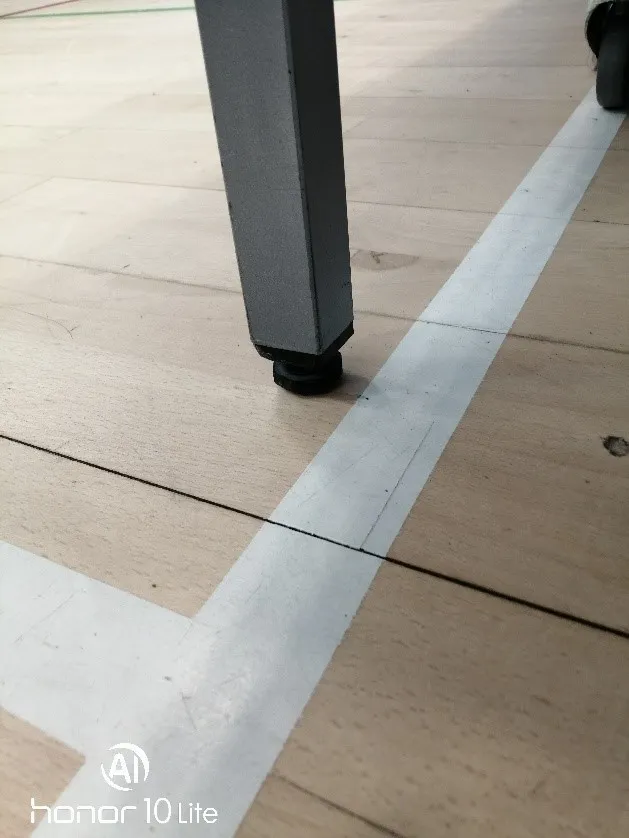
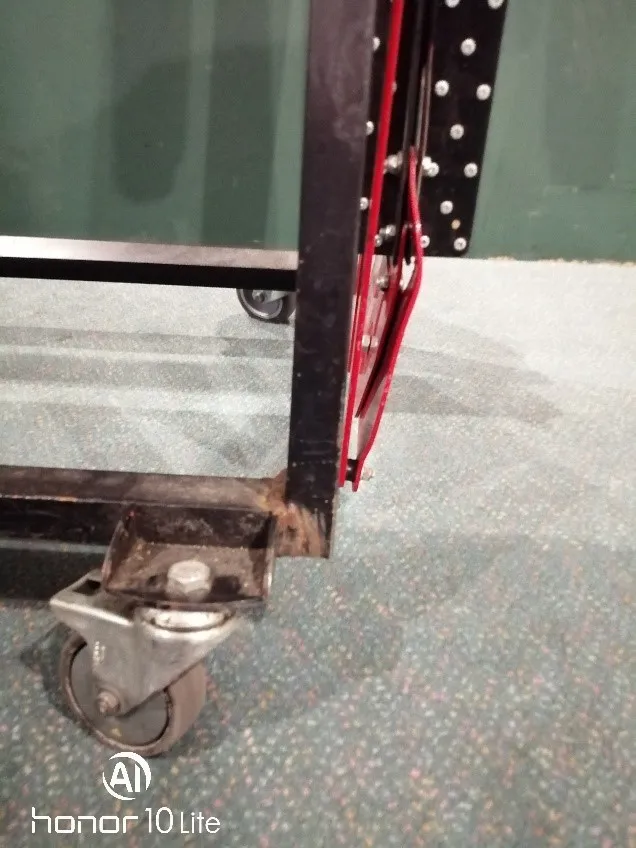
Bats
In general, you get what you pay for. Anything less than £20 is probably not worth buying. Any competent player needs a bat costing at least £30. Choice of bats for use by beginners or improvers e.g. in schools is important as the correct type of bat will allow coaching of proper strokes, such as top spin. Advice is essential as you can spend a lot of money! Bat suppliers will often give free advice on bat design.
If you have a bat you no longer use, don’t throw it away! ADTTA can use rubbers, blades or complete bats which are surplus to requirements or past their best. These can be used to make up bats for our school taster sessions where our development officers may need perhaps 30 bats for a whole class.
With good quality bats, the rubbers can be peeled off and re-glued or new rubbers fitted to the same blade – in both cases specialist glue is needed.
The rubbers will not come off cheaper bats easily. If the rubber starts to peel, then the best course of action is simply to use an all-purpose glue to re-glue the loose areas. Especially when used in schools, it is recommended to protect the edge of the bat with self-adhesive tape of either 6 or 12mm width, depending on the width of the blade and rubbers. This will stop the rubber edges being “picked” and the rubber coming loose.
Barriers
Barriers which are taken out of store very often will deteriorate quickly if not handled properly. Carrying many barriers on your shoulder will very likely damage the plastic sheet. We strongly recommend that 2, 3 or 4 barriers (depending on the strength of the grip!) are grasped at the middle point in each hand. 4 to 8 barriers can be carried comfortably in this way and the plastic sheet will last much longer without tearing.
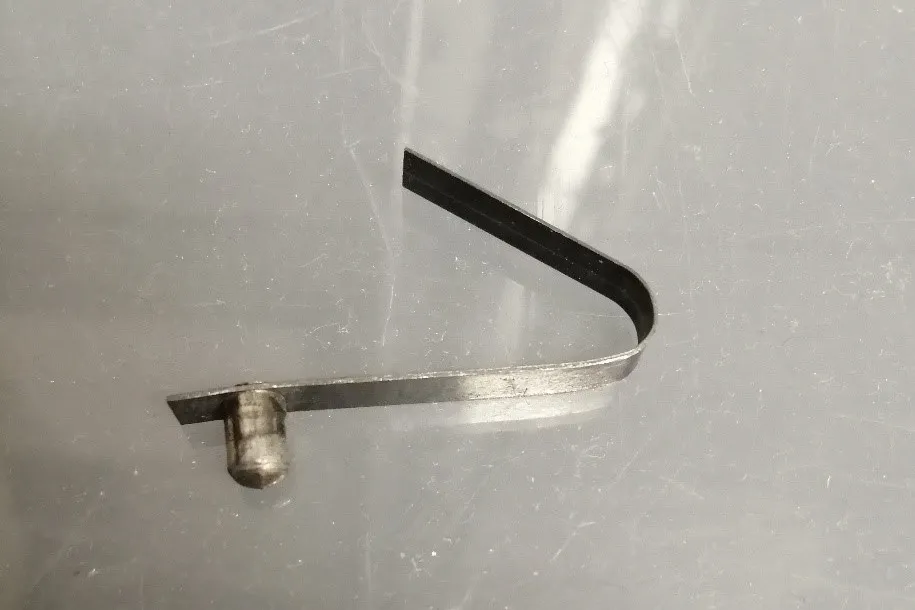
Occasionally the spring clip holding the individual sections of the metal frame will break, often when the small rivet which locates in the hole is lost or damaged. Don’t throw away the spring part (photo). A riveting gun and the right size of rivet will rectify the problem.
If necessary, replacement plastic sheets can be ordered from most suppliers. Also tears can be mended in some cases using glue suitable for soft plastics or strong transparent DUCK tape or similar.
Nets
Each complete net set – net, end cylinders (if any) and posts – should be kept together in a box or bag at all times. If any part is missing the whole set should be taken out of service until a new part is obtained. The individual parts are not usually interchangeable between different net types. There are several designs of net & it is worthwhile spending time learning how the parts are assembled in each case.